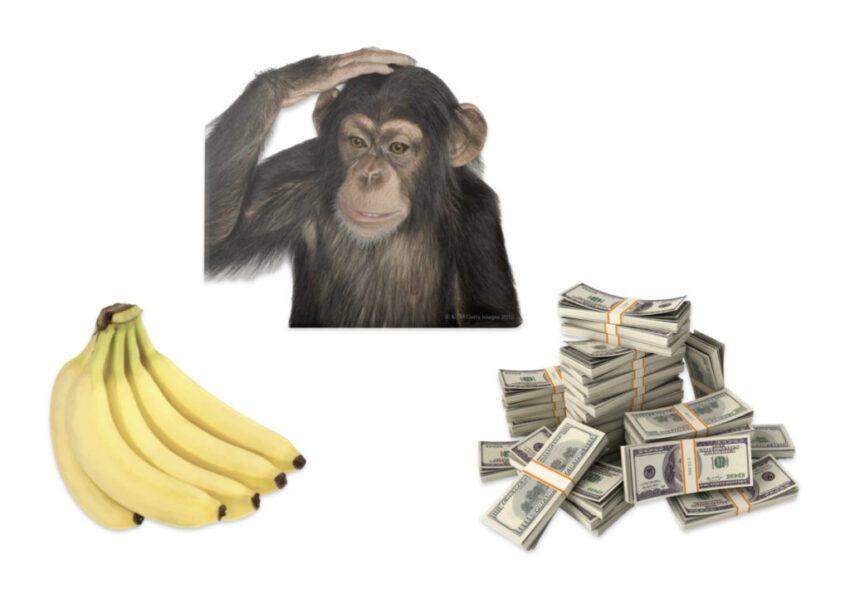
Have you ever noticed something strange about money?
You want it. You need it. You work for it, save it, count it, worry about not having enough of it. Money buys you almost everything you want—security, comfort, freedom, options, peace of mind.
And yet.
Something about it feels… wrong.
Not wrong like “I shouldn’t want this.” Wrong like “This shouldn’t exist the way it does.”
You see someone wealthy and feel a weird mix of aspiration and disgust. You save money and feel both smart and guilty. You spend it and feel relief mixed with unease. You want more of it but can’t shake the feeling that wanting it makes you somehow lesser.
Do you feel this? This strange discomfort that sits underneath every interaction with money?
Most people do. And most people explain it away with easy answers:
“Money is the root of all evil.” “Rich people are greedy.” “Capitalism corrupts.” “I’m just not materialistic.”
But these aren’t explanations. These are ways of dismissing the feeling without understanding where it comes from.
Let me show you something. Something about how money actually works—or rather, how it breaks something fundamental in the way the world is supposed to work.
Once you see it, you’ll understand why money has always felt the way it does.
The Banana
Imagine you have a banana.
Right now, in your hand, that banana is incredibly valuable. It has calories, nutrients, energy. It can keep you alive. If you’re hungry, it’s worth everything.
But here’s the thing about the banana: it won’t last.
In two days, maybe three, it starts turning brown. In a week, it’s mush. In two weeks, it’s compost. The value doesn’t just decrease—it disappears completely.
This is how nature designs value. Perishable. Temporary. Bound by time.
The fish you catch today won’t feed you next month. The fruit that ripens in summer is gone by winter. The work you do today—the energy you expend, the effort you give—that doesn’t automatically guarantee you food tomorrow.
Value, in nature, requires constant renewal. You can’t accumulate it indefinitely. You can’t store it and live off it for decades. Everything decays. Everything returns. Everything resets.
This isn’t a flaw in nature’s design. It’s a feature.
Perishability creates balance. It prevents infinite accumulation. It ensures that resources cycle. It means that no matter how much you gather today, you’ll need to participate again tomorrow. The playing field resets with each season, each harvest, each day.
The person with a hundred bananas today doesn’t have power over you next month—because those bananas will be gone. Their abundance is temporary. Their advantage is fleeting.
Nature enforces equality through decay.
The Trade That Changes Everything
Now imagine this: You have a banana. Someone else is hungry. You give them the banana, and in exchange, they give you five rupees.
Something just shifted.
That banana was perishable. Those five rupees are not.
You can hold that currency for a year. Ten years. Pass it to your children. The value doesn’t rot. It doesn’t decay. It doesn’t reset.
You’ve just converted perishable value into imperishable value.
And with that conversion, you’ve broken nature’s fundamental law.
This is what money does. This is its core function, the thing that makes it so useful and so powerful: it stores value across time.
But in doing so, it removes the natural limit that perishability imposes.
(Yes, we have inflation—money designed to decay slowly over time. We’ll come back to why that doesn’t actually fix this. But first, let me show you what breaks when nature’s law breaks.)
What Breaks When Nature’s Law Breaks
Watch what happens once value becomes storable.
Accumulation becomes possible.
In a world of only perishable goods, you can’t meaningfully hoard. You can gather a hundred bananas, but they’ll rot before you can leverage them into power. Your abundance is limited by biology.
But with money? You can accumulate indefinitely. A hundred rupees. A thousand. A million. A billion. No natural decay stops you. No biological limit caps you.
The person who figured out how to store value early—or inherited stored value—now operates in a completely different reality than the person who still depends on perishable labor and resources.
Power imbalances become structural.
In nature, advantages reset. The strongest hunter today might be injured tomorrow. The best gatherer this season might struggle next season. Everyone cycles through abundance and scarcity.
But with stored value? Your advantage doesn’t reset. It compounds.
You have money. I don’t. So you can wait. You can refuse bad deals. You can invest. You can take risks. You can buy my labor at a discount because I’m desperate and you’re not.
I have to work today to eat today. You can work today to eat forever.
That’s not a personality difference. That’s not about who’s smarter or works harder. That’s about who has imperishable value and who doesn’t.
Exploitation becomes rational.
Here’s where it gets dark.
When survival depends on perishable resources, exploitation is limited. I can’t take more bananas from you than you can grow. I can’t extract more labor from you than you can give before you collapse. The system has natural brakes.
But with money? I can pay you just enough to keep you working—just enough to survive—while storing the excess value from your labor indefinitely. And that stored value becomes power I can use to ensure you keep working for me.
The exploitation isn’t a moral failure. It’s an economic rational response to the fact that I have imperishable value and you don’t.
This is why wealth concentrates. Why inequality accelerates. Why “the rich get richer” isn’t just an observation—it’s a structural inevitability once value becomes storable without natural decay.
The chase becomes endless.
And here’s what happens to everyone—whether you have a little money or billions—in this system:
You never feel like you have enough.
Because in nature, “enough” was clear. Full belly. Warm shelter. Immediate safety. These have natural limits. Once you’ve eaten, you stop being hungry. Once you’re warm, you stop seeking heat. Safety, in its natural state, has a ceiling.
But imperishable value has no natural stopping point.
If you’re struggling: How much money is enough? Enough to stop worrying? Enough to feel secure? But what if you lose your job? What if there’s an emergency? The number keeps moving.
If you’re comfortable: How much is enough? Enough to retire? But what if you live longer than expected? What if your kids need help? What if the economy crashes? More seems like the only answer.
If you’re wealthy: How much is enough? You have more than you can spend in a lifetime. But what about legacy? What about protecting it? What about the feeling that despite everything, you still don’t feel… safe?
There’s no banana that rots and forces the question to reset. There’s just more accumulation, forever, with no natural endpoint.
The billionaire feels this as acutely as the person living paycheck to paycheck. Different numbers, same trap. Because the system removed the natural limit that would tell anyone—at any level—when to stop.
So everyone chases. And chases. And never arrives. Rich and poor alike, caught in the same broken mechanism, just playing it from different positions.
The Feeling You’ve Always Had
This is why money feels evil.
Not because you’re bad for wanting it. Not because rich people are inherently corrupt. Not because capitalism is uniquely broken.
But because money violates a fundamental natural law: value is supposed to be perishable.
And everyone—regardless of how much they have—feels the downstream wrongness of that violation.
The greed? That’s people at every wealth level trying to accumulate without limit because the system allows it and never signals when to stop.
The inequality? That’s the structural result of stored value compounding across generations while perishable labor resets daily.
The exploitation? That’s the rational economic behavior when some people have imperishable value and others don’t.
The endless chase? That’s what happens when natural safety—a full belly, warm shelter—gets replaced by infinite pseudo-safety that can never be achieved. You’re chasing something that doesn’t exist: perfect, permanent security through stored value.
The guilt you feel wanting money? That’s your instinct recognizing that participating in this system means participating in something that violates natural balance.
The hollowness wealthy people feel despite having everything? That’s the same instinct, from the other side—recognizing that stored value isn’t actually delivering the safety and peace it promised.
Your discomfort isn’t confusion. It’s clarity.
You’re feeling the wrongness of a system that broke nature’s design. And that feeling doesn’t go away at any income level—it just manifests differently.
The Failed Fix
We’re not completely blind to this problem.
Economists and policymakers know something’s off. So they invented a fix: inflation.
Make money decay over time. Just like bananas rot, let currency slowly lose value. 2% per year. 3%. Whatever rate keeps the economy “healthy.”
Inflation is supposed to restore perishability. Discourage hoarding. Encourage circulation. Make stored value gradually disappear so people can’t accumulate indefinitely.
Clever, right?
Except it doesn’t work.
Inflation is too slow.
A banana rots in days. Your labor today doesn’t feed you next year. But inflation at 3% annually? That’s barely noticeable. You can store value for decades and still preserve most of it.
The decay rate is nowhere close to nature’s rhythm.
Inflation is uneven.
It hits different people differently.
If you’re holding cash trying to save? Inflation eats it. You’re being punished for prudent behavior.
If you’re wealthy with assets—real estate, stocks, businesses? You’re not just protected from inflation. You’re often benefiting from it. Asset prices rise with inflation. You’re storing value in forms that outpace the decay.
So inflation doesn’t restore balance. It often makes inequality worse.
Inflation is gameable.
The wealthy know how to preserve value despite inflation. They buy inflation-protected assets. They invest in things that appreciate. They use debt to their advantage.
The person with stored imperishable value can always find ways to keep it imperishable.
Inflation was supposed to be the solution. But it’s like trying to make a banana rot slower—you’re still not dealing with the fundamental problem that some value shouldn’t be storable at all.
The Question Nobody’s Asking
So here’s what I want you to think about.
And here’s the question I want to pose to every economist, policymaker, and person who thinks about money:
What decay rate would actually work?
Not 2% annually. Not 3%. What rate would truly restore the balance that nature enforces through perishability?
10% per year? Your money loses a tenth of its value annually. Would that be enough to prevent infinite accumulation?
50%? Your savings halve every year. Now we’re getting closer to banana-speed decay.
100%? Your money is worthless in a year. You have to spend it or lose it. Exactly like perishable goods.
What rate would actually restore nature’s balance? And why can’t we implement it?
Is it because we lack the political will? Because wealth holders would never allow it? Because the transition would destroy existing savings? Because we don’t actually know how to do it without collapsing the entire system?
I don’t have the answer. But I know we’re not asking the question honestly.
We’ve accepted that money can be imperishable. We’ve built an entire civilization on stored value. And we keep tinkering with inflation rates as if small adjustments will fix a fundamental design flaw.
They won’t.
What You Do With This
I’m not telling you to reject money. You can’t. You live in this system. Whether you have a little or a lot, you’re in it.
I’m not telling you there’s a solution. I don’t have one. Neither does anyone else, really.
But I am telling you this: You’re not crazy for feeling what you feel about money.
That discomfort? That strange guilt mixed with desire? That sense that something’s fundamentally wrong even though you can’t quite name it? That feeling the wealthy have that despite everything, something essential is missing?
You’re all right.
Money breaks a natural law. Value is supposed to decay. Nature designed it that way for a reason—to create limits, to enforce balance, to define “enough.” And every problem we associate with money—greed, inequality, exploitation, endless accumulation, the hollowness of wealth, the anxiety of scarcity—all of it flows from that one violation.
You’re not bad for wanting money. You need it to survive in the world as it exists.
Wealthy people aren’t evil for having money. They’re trapped in the same broken mechanism, just from a different position.
The system isn’t broken because of human nature or moral failure.
The system is broken because it made value imperishable, and in doing so, it made true safety—the kind with natural limits—impossible to achieve.
And until we’re willing to ask the hard question—what decay rate would actually restore balance, and are we willing to implement it?—nothing fundamental will change.
The inequality will grow. The chase will continue. The discomfort will persist.
Because we’re all trying to live in a world where the natural law of perishability has been suspended, and our instincts know that doesn’t work.
The Clarity
So the next time you feel that strange wrongness about money—when you’re counting your savings and feel both secure and guilty, when you see wealth and feel both admiration and disgust, when you want more but can’t shake the feeling that wanting it diminishes you—remember this:
It’s not you. It’s the design.
Money is a tool that does something nature never allowed: it stores value without decay.
And everything that feels evil about money—every downstream consequence, every structural inequality, every exploitation, every endless accumulation—it all traces back to that one violation.
You can’t fix it alone. Maybe we can’t fix it at all.
But you can stop carrying the guilt of feeling what you feel.
Your instinct is right. Something is broken.
You’re just finally seeing what.