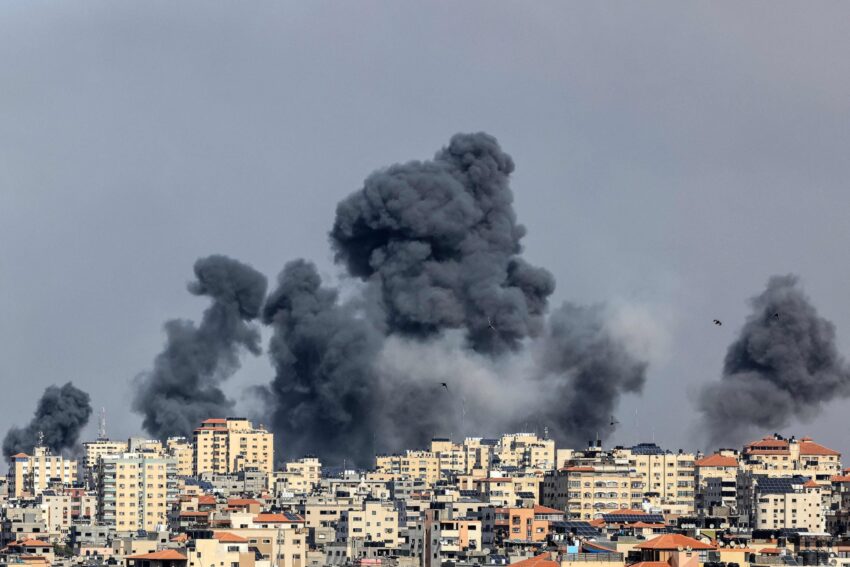
Why Regions Are Really Fighting Around The World…
They’ve been fighting for decades. Some for generations. Some for centuries.
Israel and Palestine. Serbs and Croats. Sinhalese and Tamils. The conflicts fill history books, news cycles, peace negotiations that go nowhere.
We call them ethnic conflicts. Cultural clashes. Religious wars. Ancient hatreds that can’t be reconciled.
Experts write papers. Diplomats broker ceasefires that collapse. The world watches, shakes its head, and concludes: Some conflicts are just unsolvable. Some groups simply cannot coexist.
But what if we’re looking at it wrong?
What if the explanation we’ve accepted—that these are battles over beliefs, identity, and ideology—is missing something fundamental?
What if there’s a simpler, deeper mechanism driving all of it?
The Conflicts That Won’t End
Israel and Palestine.
You know the narrative. Two peoples claiming the same land. Jews and Muslims. Biblical history. Modern displacement. Religious sites. Competing national identities.
Decades of negotiations. Two-state solutions proposed and rejected. Violence that erupts, pauses, erupts again. Leaders on both sides declaring the other side impossible to work with.
The explanation everyone accepts: They believe fundamentally different things about God, history, and who belongs in that land. The beliefs are irreconcilable. Therefore, peace is impossible.
The Balkans.
Serbs, Croats, Bosnians. Orthodox Christians, Catholics, Muslims. The wars of the 1990s that turned neighbors into executioners.
Before the collapse, Yugoslavia held together for decades. People intermarried. Lived in mixed communities. Then suddenly—mass violence. Ethnic cleansing. Atrocities that shocked the world.
The explanation: Ancient ethnic hatreds, suppressed under communism, exploding when the system collapsed. These groups never really got along. The hatred was always there, waiting.
Sri Lanka and the Tamil Tigers.
Sinhalese majority. Tamil minority. A civil war lasting nearly three decades. Suicide bombings. Government crackdowns. Tens of thousands dead.
The Tamil Tigers fought for an independent homeland. The government fought to preserve national unity. Both sides committed atrocities. Peace talks failed repeatedly.
The explanation: Ethnic and linguistic divisions. Historical oppression. Incompatible visions of how the nation should be organized. The kind of conflict that only ends when one side is destroyed.
What We’re Told
In all these cases, the story is the same:
These conflicts are about identity. About belief. About ideology and history and incompatible worldviews.
And because beliefs are so deeply held, because identity is so fundamental, because ideology shapes everything—these conflicts become intractable. You can’t negotiate someone out of their religion. You can’t compromise on who they believe they are. You can’t split the difference on sacred history.
So the conflicts persist. Generation after generation. With everyone agreeing: This is just how it is when groups with fundamentally different beliefs are forced to share space.
But let me show you something that will make you see all of this differently.
How Someone Sits on a Sofa
You have a way of sitting on your sofa.
Maybe you sprawl out—legs extended, taking up space, relaxed and loose. Maybe you sit upright—back straight, feet flat on the floor, contained and proper. Maybe you curl up—knees pulled in, occupying minimal space, cozy and compact.
Maybe you kick your shoes off immediately. Maybe you keep them on. Maybe you put your feet up on the coffee table. Maybe that would never occur to you.
You didn’t decide any of this consciously. You learned it.
From your family growing up. From early roommates. From trial and error about what feels comfortable. The pattern got reinforced through repetition until it became automatic—just how you sit. The “normal” way. The “right” way.
Now imagine someone else sits on your sofa completely differently.
They sprawl when you sit upright. They keep shoes on when you always remove them. They take up the whole space when you’ve learned to be compact. Or the reverse—they’re rigid and formal when you’re relaxed and loose.
You watch them sit, and something in you registers discomfort. It feels wrong. Disrespectful, even. Why can’t they sit properly? Why do they have to be so [sprawled/stiff/careless/uptight]?
If you live with this person, you’ll probably say something. “Can you not put your feet there?” “Do you have to take up the whole couch?” “Why are you sitting like that?”
And they’ll be confused. Because to them, they’re sitting normally. The way people sit. The obvious way.
If pressed to explain, you’ll both come up with reasons. “Feet on furniture damages it.” “Sitting upright is better for your back.” “Shoes track dirt.” “Taking off shoes every time is impractical.”
The reasons sound logical. But here’s what actually happened:
You each learned a habit. That habit became automatic—encoded in neural pathways through repetition, reinforced by your social environment, eventually operating below conscious awareness. When you encounter someone whose habit is incompatible, your system registers it as a predictability violation. Your brain, wired to prefer pattern consistency and in-group behavioral norms, flags the difference as: Wrong. Uncomfortable. Threatening to how things should be.
And then—only then—your mind generates the explanation. The reasoning about why your way is right and their way is wrong. The logic arrives after the discomfort, not before.
The conflict isn’t really about the logic. It’s about incompatible learned behaviors wrapped in logical-sounding justification.
Hold that thought.
What’s Actually Happening
Go back to Israel and Palestine.
Strip away the speeches and the flags and the historical narratives for a moment. Look at the actual, daily, repeated behaviors:
How prayer happens in public space. One group learned habits of five daily prayers requiring public accommodation—call to prayer from loudspeakers, prayer spaces in public areas, community rhythms organized around these times. The other group learned habits of Sabbath observance, synagogue attendance, different timing and rhythm of religious practice.
These aren’t just different beliefs about God. These are incompatible uses of shared space. The call to prayer disrupts one group’s sleep and work habits. The Sabbath restrictions limit when the other group can move and trade.
How land gets used and developed. One group learned habits of permanent settlement, dense urban development, modern infrastructure. The other group learned different habits of land tenure, different building practices, different relationships to territory and agriculture.
When these habits clash—when one group builds in a pattern that violates the other group’s learned sense of proper land use—the friction is immediate and visceral.
How families organize. Deeply different habits around gender roles, child-rearing, marriage, public interaction between men and women. These aren’t just “cultural values”—they’re daily behaviors. And when forced into shared space, they create constant friction.
Now here’s what happens: The friction gets wrapped in ideology.
“They’re trying to destroy our way of life.” “They don’t respect what’s sacred to us.” “This is about ancient rights and God’s will.”
The ideology isn’t wrong, exactly. These groups do have different religions, different histories, different claims. But the ideology is the story that explains the friction, not the cause that created it.
The cause is simpler: Incompatible learned behaviors. Automatic patterns colliding. Habit clash.
Like the sofa. But with higher stakes.
The Balkans Pattern
For decades, Serbs and Croats lived side by side in Yugoslavia. Different habits coexisted: different patterns of village organization, religious practice in daily life, historical storytelling. The friction was there, but manageable because there was space and resources for different patterns.
Then the economic system collapsed. Competition intensified. Suddenly, people with incompatible habits were fighting over scarce resources in close quarters.
The habit clash became unbearable. And ideology arrived to organize it—nationalist movements giving names and historical narratives to the automatic discomfort people already felt. “That feeling you have? It’s because they’re your ancient enemy.”
The violence that followed was real. The hatred was real. But it wasn’t ancient—it was habit incompatibility amplified by crisis and organized by ideology.
Sri Lanka’s Unspoken Truth
The Sri Lankan conflict gets explained through ethnicity and language. But look at the habits underneath:
Language as lived daily practice. Not just that groups speak different languages, but that language habit shaped every interaction—how children got educated, how people accessed government, how jobs were obtained, how social mobility worked.
One group’s language habits were built into how the state functioned. The other group’s habits were incompatible with those systems. Every interaction with government, every attempt to navigate bureaucracy—friction. Constant, grinding friction.
How local governance worked. Tamil communities had learned habits of local self-governance and community decision-making. The Sinhalese-dominated central government had learned different habits of authority and control.
When central government imposed its patterns on Tamil regions, the incompatibility was immediate. Not because of ideology. Because the actual, daily practices couldn’t coexist.
For years, Tamil people tried to work within the system. But their habits—their learned patterns of organizing life—were incompatible with how the state was structured.
Eventually, the friction became intolerable. And the LTTE emerged—not from abstract nationalist ideology first, but from the lived experience of habit incompatibility making ordinary life impossible.
The manifestos and the talk of Tamil homeland? Those came after. They gave language to what people already felt: “Our way of living cannot coexist with their way of governing.”
The Mechanism
See it now?
In every case:
- Groups develop different habits through generations of lived experience
- These habits become automatic—”our way,” “normal,” “right”
- When forced into close contact or competition for resources, the habits clash
- The clash creates visceral discomfort that feels threatening, wrong, intolerable
- Ideology arrives to explain and justify the feeling
- The conflict gets narrated as driven by beliefs, when it’s actually driven by behaviors
There’s a phrase in Hindi that captures this perfectly:
“Matbhed hai actually habit bhed hai” — what looks like a difference of opinion is actually a difference of habits.
The opinions—the beliefs about right and wrong, the ideologies about identity and belonging, the narratives about ancient grievances—all of that is real. People genuinely believe it. They’ll die for it.
But it’s not the cause. It’s the justification.
The cause is simpler and deeper: incompatible learned behaviors. Automatic responses formed through repetition. Habits that worked in one context but clash in another.
The same mechanism that makes you uncomfortable when someone sits “wrong” on your sofa.
Just at scale. With resources and territory and survival at stake. With generations of reinforcement. With sophisticated ideological frameworks built on top.
But underneath? It’s still habit clash.
A Critical Distinction
Now, I need to acknowledge something important: habit clash isn’t always symmetrical.
Sometimes what looks like “incompatible habits” is actually one group enforcing dominance—resource extraction, cultural suppression, systematic exclusion. The colonizer’s “habit” of ruling isn’t morally equivalent to the colonized’s “habit” of resisting.
But here’s what’s crucial: even in these asymmetric power dynamics, the enforcement becomes habitual, the resistance becomes habitual, and both get wrapped in ideologies that make the behavioral conflict seem like cosmic necessity rather than learned pattern.
The power imbalance is real. The oppression is real. But recognizing the habit mechanism doesn’t erase that—it helps us see how oppression gets normalized, how resistance gets organized, and why conflicts persist even when the original power dynamics shift.
Also worth noting: there are cases where ideology genuinely precedes behavior—religious texts commanding violence, political manifestos organizing movements. But even then, the ideology must be enacted through repeated behaviors to create lasting conflict. And once enacted repeatedly, it becomes habit, operating automatically, defended reflexively.
Why This Changes Everything
Understanding this shifts how we see conflict entirely.
It removes the sense of inevitability.
When conflicts are about beliefs and identity, they seem unchangeable. How do you resolve incompatible religions? How do you reconcile ancient grievances? You can’t. So conflict appears permanent, tragic, unavoidable.
But when conflicts are about habits? Habits can be examined. Habits can be changed. Habits can coexist if there’s enough space or smart enough systems to accommodate different patterns.
The conflict isn’t inevitable. It’s the result of specific conditions forcing incompatible behaviors into collision.
It makes empathy possible.
When you think “they’re fighting because they hate each other’s beliefs,” you can’t relate. That seems foreign, extreme, irrational.
But when you see “they’re fighting because their automatic behaviors are incompatible and they don’t know how else to resolve it”—that’s something you understand completely.
You’ve felt it. The visceral discomfort when someone does something “wrong” that’s just different from your learned pattern. The defensiveness when your automatic way gets challenged. The absolute certainty that your way is “right” even though you can’t fully articulate why.
That’s them too. Just scaled up. With higher stakes. With ideology amplifying what would otherwise be manageable friction.
It suggests different approaches.
Instead of trying to change beliefs or negotiate ideology—nearly impossible—you can:
- Create enough space for different habit patterns to coexist without forced interaction
- Acknowledge habit differences explicitly instead of pretending they’re not real or don’t matter
- Design governing systems that don’t require one group to abandon their behavioral patterns
- Reduce the resource competition that forces incompatible habits into direct collision
- Work with younger generations before habits become rigidly fixed
- Focus on practical accommodation of different patterns rather than demanding ideological agreement
None of this is easy. None of it resolves conflict quickly. But it’s more workable than waiting for people to abandon beliefs they’ve wrapped their entire identity around.
What You See Now
I’m not telling you to solve these conflicts. I’m asking you to see them clearly.
Next time you read about ethnic tensions, cultural clashes, religious wars—pause.
Ask yourself: What habits are actually clashing here?
Not what do they believe. Not what’s their ideology. But what are the actual, specific, daily, repeated behaviors that are incompatible?
How did those behaviors become “identity”? What’s the ideology justifying, rather than causing?
You’ll start seeing the pattern everywhere. Because it is everywhere.
The couple fighting about how to sit on the sofa. The neighbors fighting about noise levels or how to use shared space. The communities fighting about school curriculums or public behavior. The nations fighting about territory and governance.
Same mechanism. Different scale. Different stakes.
Different learned behaviors colliding. Automatic discomfort arising. Ideology arriving to explain and amplify and organize the response.
And once you see it—really see it—you stop viewing conflict as mysterious or inevitable.
You see it as what it is: humans, running their learned programs, clashing when those programs are incompatible in shared space, then building elaborate belief systems to make sense of why the clash feels so important, so threatening, so worth fighting over.
The stories are real. The beliefs are real. The clash is real. The pain is real.
But the cause?
It’s simpler than anyone wants to admit.
Different groups learned different habits. Those habits can’t coexist in close quarters without friction. And rather than saying “we have incompatible behavioral patterns,” which sounds manageable, we say “they threaten everything we are,” which sounds like war is the only option.
That’s what they’re really fighting about.
Not ancient hatreds. Not incompatible souls. Not destinies written in sacred texts.
Just different ways of sitting on the same sofa.
The sofa being land, resources, governance, daily life.
And the tragedy being that we’ve convinced ourselves the differences are about belief, when they’re actually about behavior.
Which means they could be accommodated, if we were willing to see them clearly.
But we’re not. Because the ideology is too useful. Too organizing. Too good at turning uncomfortable friction into meaningful struggle.
So the conflicts continue. And we keep telling ourselves they’re unsolvable.
When really, we just haven’t looked at what’s actually being fought over.
Now you know.
Thoughts on this? Questions? Something you’re seeing in your own life or the world?
Email me: [your.email@address.com]