Let me tell you about something nobody taught us in school — something that will shape every major decision you make, yet remains carefully invisible.
The Contract You Never Read
You’ve signed a contract. So have I. So has everyone you know.
Not with a pen, but by being born here. By living here. The “social contract,” they call it.
It binds you to thousands of rules. What you can own, where you can go, how you can protest, whom you can marry. Every day, in ways you don’t notice, this contract governs your life.
Here’s the thing: Nobody ever showed it to you.
We spent years learning Newton’s laws. But the laws that actually govern your freedom, your money, your rights? Never discussed. Not in a way that helps you protect yourself.
Watch what happens because of this.
Two Kinds of People
Walk into any serious situation — a property dispute, a business deal, a government office — and you’ll see it immediately.
Some people know the rules. They move smoothly. They know which words matter, which procedures to follow, where their leverage is.
Others — good people, honest people — they approach everything with fairness and common sense. They believe the system will protect them if they’re in the right.
Then reality arrives.
They sign things they don’t fully understand. They trust processes that have no obligation to be fair. They lose — not because they’re bad people, but because they didn’t know they were playing a game with rules they’d never learned.
This isn’t an accident.
Watch closely: the people who understand the system never think to question why it isn’t taught to everyone. To them, it’s obvious, inherited, part of the air they breathe. They pass it to their children naturally.
The rest of us? We’re told law is for experts. That morality is enough. That the system takes care of good people.
Until we need it — and discover it doesn’t work that way at all.
Where This Started
You need to see how far back this goes.
Imagine a village 10,000 years ago. Fifty people. Everyone knows everyone. Someone steals your grain? The whole village knows. Shame works. Memory works.
Then cities appear.
Babylon swells to 200,000 people. You don’t know your neighbors anymore. Strangers trade with strangers. Merchants arrive from distant lands. Who owes what? Who owns which field? What happens when someone breaks a promise?
Memory fails. Chaos threatens.
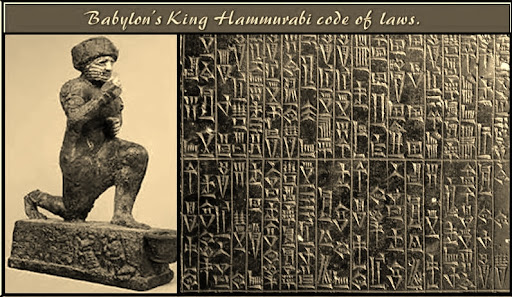
So in 1754 BCE, King Hammurabi does something revolutionary: he writes the rules down. 282 laws, carved in stone.
If you break another man’s bone, yours gets broken. If you steal, you pay thirty times the value. If your irrigation dam floods your neighbor’s field, you pay for the damage.
Brutal by our standards. But clear.
For the first time, people could know in advance what would happen. Disputes could be settled without tribal warfare. Commerce could expand because contracts had meaning.
Law emerged to solve a problem: How do strangers live together at scale?
And here’s what happened immediately: Those who studied the code gained power over those who didn’t.
Merchants who understood contract law accumulated wealth. Priests who interpreted the rules controlled disputes. The literate few shaped outcomes. The illiterate many lived under rules they couldn’t read.
The first performance of a show that never ends.
The Empire Expands the Stage
Rome saw what worked and built something grander.
They needed to govern 70 million people across three continents. Impossible to do through personal relationships. So they created the most sophisticated legal system the world had seen.
Property rights, inheritance, contracts, citizenship, marriage, crime — everything categorized, proceduralized, precedented. They turned abstract ideas like “ownership” into enforceable mechanisms.
And watch what happened: Those who mastered Roman law became senators, governors, judges. They protected their property, won their disputes, shaped the empire.
Meanwhile, farmers and laborers and soldiers lived under these laws without understanding them.
The system worked. The empire functioned. But the gap between those who knew the rules and those who didn’t? That gap was structural. Built into the design.
Not through malice — through complexity.
And here’s the pattern you need to see: every few generations, reformers appeared. Brilliant people who saw the unfairness and tried to fix it. They simplified procedures, expanded access, fought for the common people.
The empire celebrated them. Put up statues. Wrote their names in history.
And then absorbed their reforms into the machinery — which kept running, now with the added legitimacy of having “listened” and “evolved.”
The show needed good people trying to fix it. That’s what made the audience believe the show could be fair.
The Circus Rebuilds Itself
Rome fell. Europe fragmented. Legal systems simplified.
For centuries, feudal lords ruled through personal authority. The complexity disappeared.
Then cities grew again. Trade revived. Strangers needed to do business across kingdoms.
And the same problem returned: How do we organize complexity?
Medieval jurists rediscovered Roman law. Universities in Bologna, Paris, Oxford began teaching it. Legal scholars studied ancient texts, adapted them, spread them across Europe.
Each system — common law, civil law, canon law — had the same goal: create predictable rules for complex societies.
And each system produced the same result: literacy divided people into those who thrived and those who struggled.
I watched this pattern my whole life. Every generation produces passionate reformers. They enter the system with conviction, believing they can make it serve everyone equally.
Some succeed in expanding rights. Access improves. Procedures become fairer.
But then what happens? The reforms add new layers. New rights create new procedures. Simpler laws get complicated in application. Each generation’s solution becomes the next generation’s complexity.
The reformers aren’t wrong. The system does evolve.
But the fundamental gap? It persists.
Because complexity is what happens when you try to govern millions of people fairly.
You can’t have sophisticated commerce without sophisticated contract law. You can’t have property rights without intricate recording systems. You can’t have individual freedoms without complex constitutional frameworks.
So the circus adds new acts, new attractions, new spectacular performances of reform and progress.
And underneath? The same mechanism, running quietly: Those who engage seriously with the rules thrive. Those who don’t pay for their ignorance.
What We Inherited
Our legal system — the Indian Constitution, the codes we live under — descends directly from this history.
British common law, which drew from medieval English law, which drew from Roman law, which drew from earlier codes like Hammurabi’s.
The language evolved. Rights expanded. But the fundamental mechanism remained:
Law creates order by establishing rules that govern how strangers interact at scale.
And as societies grew more complex, law grew more complex. It had to.
You can’t govern a modern economy with 282 rules carved in stone. So we have thousands of laws, millions of regulations, specialized domains. Property law, contract law, criminal law, corporate law, tax law — each a universe unto itself.
This complexity isn’t a conspiracy. It’s inevitable.
And that complexity creates a choice, the same choice humans have faced since Babylon:
Engage seriously — study what affects you, learn the relevant rules, navigate deliberately.
Or dismiss it as “not for you” — trust that good intentions are enough, hope someone else handles it.
Throughout history, this choice has determined everything.
Seeing the Performance
So here’s what I need you to see clearly:
The law is a mechanism. It doesn’t care about your morality. It responds to your engagement.
This has been true from Hammurabi’s Babylon to modern India.
The system was built with genuine intent — to create order, enable cooperation, protect rights. But that intent doesn’t change how the mechanism works.
When you don’t understand it, you navigate life blind. You make choices based on assumptions that don’t match reality. You trust protections that exist only on paper. You miss opportunities you don’t know are available.
And when you stumble — and you will — the system doesn’t ask if you meant well. It asks if you followed procedure.
I’ve seen good people lose property because they didn’t read what they signed. Honest people trapped in agreements they didn’t understand. Talented people unable to assert rights they didn’t know they had.
Not because the system was designed to hurt them. But because the system is indifferent to everything except the rules.
What You Do With This
I’m not asking you to become a lawyer.
I’m asking you to refuse to be the person who discovers too late that they were playing a game they didn’t know existed.
Take the system seriously. It governs significant parts of your life. Dismissing it as “not for you” is like dismissing language or mathematics as “not for you.” You pay for that dismissal in ways you won’t see coming.
Learn the rules that affect you. When you make important decisions — in property, business, agreements, rights — learn what governs them. Don’t guess. Don’t assume. Study what’s actually written.
Read everything you sign. Every time. Even when it’s “standard.” The moment you sign is the moment you’re bound. If you don’t understand it, don’t sign it. This applies to everything.
Document what matters. In disputes, evidence outweighs truth. Keep records. Save communications. This isn’t paranoia — it’s literacy in how systems establish facts.
Know your limits. Complex situations require expertise. The cost of consultation is almost always less than the cost of ignorance.
Watch what happens when you do this. You stop being surprised. You stop trusting blindly. You start making informed choices instead of hopeful ones.
The system is neutral. It rewards engagement. Always has, from ancient Babylon to now.
Not because of conspiracy, but because that’s how complex systems work.
The Inheritance
That’s what I’m leaving you, my son.
Not wealth or connections, but sight.
The ability to see what most people miss: Law exists to organize complexity. It evolved from Hammurabi’s 282 rules to millions of modern regulations because human societies grew more complex. Each generation inherits and adapts these mechanisms.
The gap between those who know the rules and those who don’t — it’s not a conspiracy. It’s the inevitable result of complexity meeting differential engagement.
The circus performs its spectacular reforms, celebrates its heroes, evolves its procedures. And underneath, the fundamental truth remains:
Some people take the system seriously. They study, learn, navigate skillfully.
Others dismiss it as “not for them” — and pay the price.
You get to choose.
From Hammurabi’s stone to the Indian Constitution, that choice has always determined outcomes.
The moment you understand this — truly understand it — everything shifts.
You’re no longer a passive participant in your own life. You’re no longer shocked when the system behaves like a system. You’re no longer waiting for fairness to arrive automatically.
You see the performance for what it is.
And you live clearly within it — engaged, informed, impossible to fool.
That’s the inheritance.
The rest, you’ll figure out.